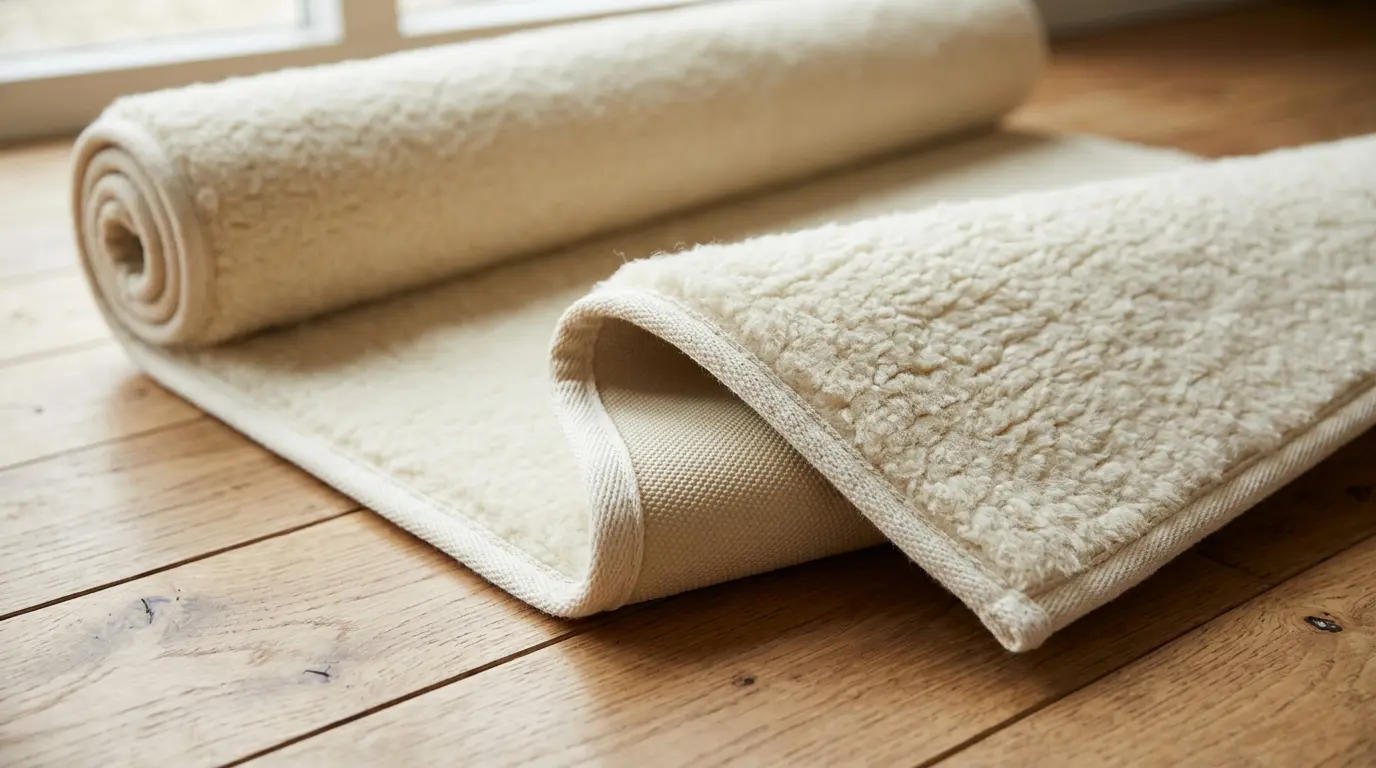
A wool yoga mat makes sense the moment you sit down on a cold floor. It feels more like a textile than a piece of gym equipment, and for a practice that involves long stretches on your back or knees, that difference can matter. Stand up for a fast sequence, though, and your priorities change. How firmly your feet hold the surface matters more than how soft it feels.
Wollmatten is the German plural of Wollmatte, meaning “wool mats.” It describes a material category, and the intended use depends on the product. German retailers use the term for wool yoga mats, while wool mats are also sold for purposes as different as insulating outdoor plant pots. For home use, the first thing to check is whether the listing describes an exercise mat, a floor covering, or a specialist product.
What Does a Wollmatten Listing Actually Tell You?
“Wool mat” tells you something about the material. It tells you very little about what the mat will feel like underfoot, how it will sit on the floor, or whether you can wash it. Those details come from the construction.
A plush wool yoga mat has a raised surface, or pile. A felt mat is made from fibers joined into a denser sheet. A woven wool floor covering has yarns interlaced across its surface. You can see the difference in products on the market: Bodynova sells high-pile wool yoga mats, Wollwerkstatt makes a movement mat filled with wool felt, and LaModula sells handwoven wool rugs. Each uses wool for a different job.
What Schurwolle, Hochflor, and Unterseite Mean
Three words are especially useful when shopping from a German listing:
| German term | What it means | Why it matters |
|---|---|---|
| Schurwolle | Virgin wool | Identifies the wool fiber; check whether the claim refers to the surface or the whole product. |
| Hochflor | High pile | Describes a raised, fluffy surface. It doesn’t tell you how firm the mat is underneath. |
| Unterseite | Underside or backing | Tells you what touches the floor. Check this separately for grip, floor compatibility, and latex content. |
The backing is easy to miss in a product photo. Sat Nam, for example, lists a natural latex underside on one wool yoga mat and a quilted cotton underside on another. The two products can look similar from above while offering different surfaces against the floor.
Where a Wool Mat Makes the Most Sense
Slow Yoga, Stretching, and Meditation
If you spend much of a session seated or lying down, wool’s soft surface has a clear purpose. Think of a supported twist held for a few minutes, or a meditation session where you want some separation from a cold floor. Yogabox recommends wool mats primarily for styles that include more seated and reclining poses.
If your practice is mostly standing poses or quick transitions, prioritize a surface that gives your hands and feet a predictable hold. Grip has two parts: the underside needs to stay put on the floor, and the top needs to feel steady against your hands and feet. A grippy backing addresses the first part. It doesn’t change how the wool pile feels under your palm.
A Bedside Rug or a Quiet Corner
If what you like is the texture and you plan to leave the mat out all day, a woven wool rug may suit the room better. It can soften the area beside a bed or define a reading corner without needing to double as exercise equipment. LaModula’s handwoven wool rugs illustrate this distinction: they’re sold as home textiles, with considerations such as rug underlay and underfloor heating addressed separately.
Measure the space where the mat will actually sit. Beside a bed, you want it where your feet land. Near a doorway, check that the door clears the finished height. For floor work, measure the space you need when fully stretched out. The right dimensions make more difference to daily use than an upgrade to a thicker pile.
What Makes a Wool Mat “Premium”?
A product labeled premium can have features worth paying for, but the word alone doesn’t tell you which ones. Bodynova’s Vishnu Premium, for instance, has cotton binding around the wool mat. That is a specific construction detail you can compare with another model. A close-up of the edge tells you more about the finish than a wide photo of the mat in a styled room.
Before spending more, check whether the listing answers these questions:
- What is each layer made from? Look for separate details about the wool surface, backing, and edge binding.
- Does it fit the way you’ll use it? A mat you carry to class has different requirements from one you leave unrolled at home. Check its weight and rolled dimensions if you’ll move it often.
- Can you maintain it? Read the care instructions for the exact model. If you expect frequent spills or sweat, a mat that cannot be washed may be a poor fit.
- Can you return it after checking the feel? If you’re ordering from overseas, read the retailer’s return terms before buying. The texture and firmness are difficult to judge from a screen.
How to Care for a Wool Mat
Start with the label. Even closely related products can have different instructions. Bodynova lists cold handwashing for its Surya mat, while its bound Surya Premium is listed as generally not washable. A Sat Nam model with a natural latex backing, meanwhile, lists handwashing or a wool wash cycle. You can’t transfer the instructions from one wool mat to another.
If a spill happens, blot it promptly and check what the maker allows before applying water or a cleaning product. If you’re still shopping, imagine how you’ll use the mat on an ordinary week. A piece that comes out for evening stretches has different cleaning needs from one that sits beside a busy doorway.
Is a Wool Mat Worth It?
A well-chosen wool mat earns its place when you use it for something wool does well. If the cold floor is what keeps you from settling into an evening stretch, a soft wool surface can be a worthwhile upgrade. If you want something for sweaty workouts, fast transitions, or regular washing, put those needs first. You’ll know more from the underside, the edge, and the care label than from the word premium.
Conclusion
Wollmatten make the most sense when softness and warmth are what you want from a mat. A plush wool surface can make slow stretches on a cold floor more comfortable, while a woven wool mat may be a better fit beside the bed. If you need firm footing for fast yoga sequences or a mat you can wash regularly, check the surface, backing, and care label before buying. The best upgrade is the one that fits how you’ll use it on an ordinary day.