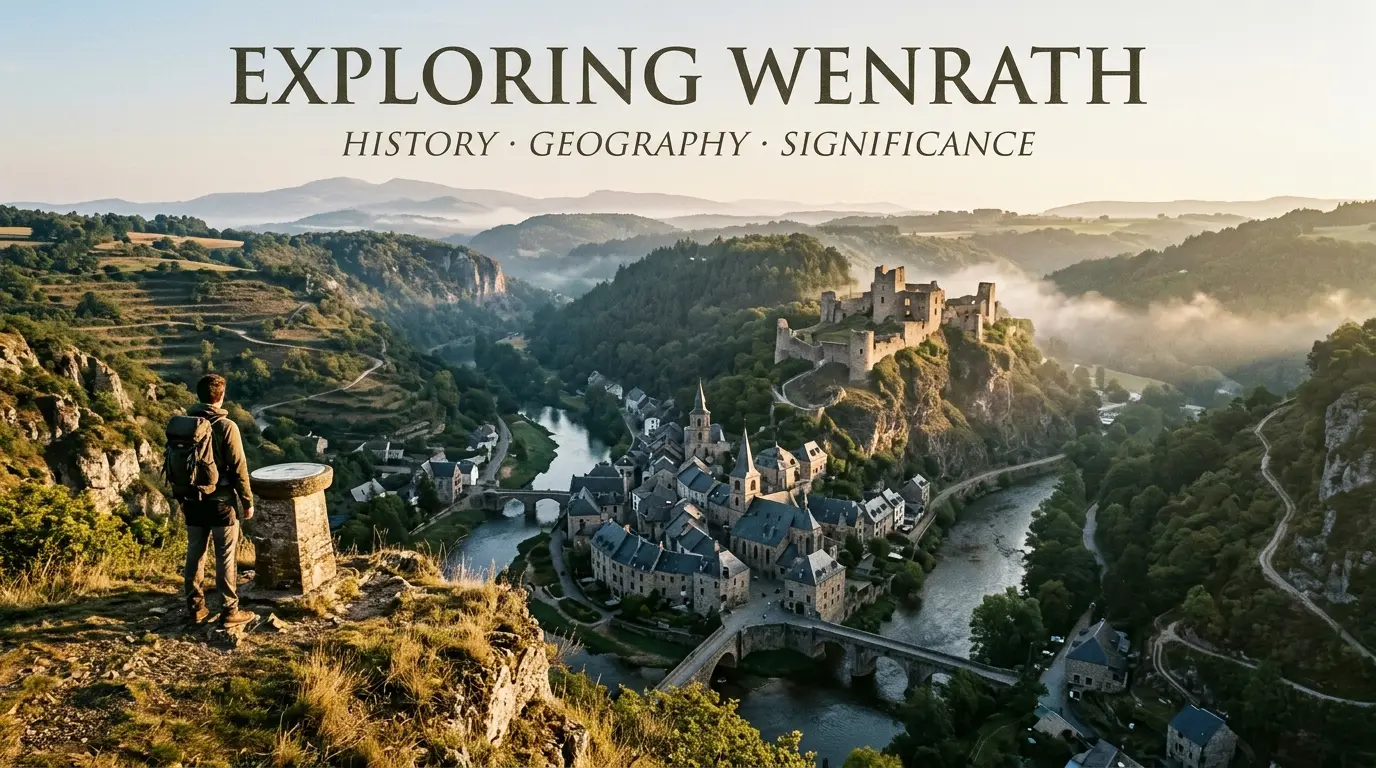
A small German locality with fewer than 300 residents has a connection to a bicycle tire brand recognized far beyond its borders. That place is Wehnrath, part of Reichshof in western Germany and the location behind published references to Wenrath. Reichshof’s municipal records use the spelling with an “h,” while a German parliamentary report uses the shorter version.
Understanding the name leads to a more interesting story than a spelling correction alone. Wehnrath brings together a centuries-old settlement, a commercial area beside an important highway, and a surrounding landscape where forests and drinking-water protection remain part of everyday regional concerns.
Wenrath and Wehnrath: Understanding the Name
The connection between the two spellings appears in an archived 2012 German Bundestag feature about constituency work. The report follows politician Klaus-Peter Flosbach on a visit to bicycle tire company Schwalbe in “Reichshof-Wenrath.” It later uses “Wenrath” again when describing the commercial district where the company was based.
Current municipal economic-development information calls the location Wehnrath, identifying both the Gewerbegebiet Wehnrath the Wehnrath commercial area and the intermunicipal Wehnrath/Sinspert business park.
For an address, map search, or business inquiry, Wehnrath, Reichshof, Germany is therefore the more useful wording. The parliamentary reference explains why someone researching the shorter spelling can arrive at the same location. It does not establish that the locality underwent an official name change.
Where Is Wehnrath?
Wehnrath belongs to the municipality of Reichshof in the Oberbergischer Kreis district of North Rhine-Westphalia, Germany. Geographic reference information places it northeast of the Wiehltalsperre reservoir, with Gummersbach to the northwest. Its postal code is 51580.
For readers unfamiliar with German addresses, those names describe different geographical levels. North Rhine-Westphalia is the state; Oberbergischer Kreis is the district; Reichshof is the municipality; and Wehnrath is a locality within it.
The setting is part of the Oberbergisches Land, which Reichshof describes as a landscape of wooded hills and meadows. That rural character sits alongside commercial development: the municipality promotes its landscape and business infrastructure together, rather than treating them as separate identities.
A Small Residential Community
Reichshof’s population table recorded 286 residents in Wehnrath on December 31, 2024, compared with 295 at the end of 2023. These figures describe the locality, not the whole municipality, which recorded 19,273 residents at the end of 2024.
The distinction helps explain the apparent contrast between a small settlement and a substantial business presence. A residential population count measures where people live; it does not capture everyone who travels into an area for work, deliveries, or appointments.
A History That Predates Modern Reichshof
The German Wikipedia entry for Wehnrath, citing local historian Klaus Pampus’s published research, dates its earliest documentary mention to 1357. The name recorded in that account is Wenegenroede, associated with Eckhardt von Wenegenroede and a conflict involving the archbishop of Cologne. This is a reported early written reference, rather than a confirmed founding date.
A separate turning point came centuries later. The present municipality of Reichshof was formed in 1969, when the previously independent municipalities of Denklingen and Eckenhagen were brought together through local-government reorganization.
That chronology matters. The locality’s recorded history is much older than the municipal structure used in its address today. Reading both histories together gives a clearer picture of how an established settlement became part of modern Reichshof.
How the Commercial Area Changed Its Role
Wehnrath’s modern significance is closely connected to road access. Municipal information places its commercial area and the Wehnrath/Sinspert business park directly beside the A4 highway, with the wider municipality also benefiting from connections to the B256.
Reichshof’s account of its first 40 years identifies the A4 and the development of commercial land as important contributors to its economic progress. By that 2009 anniversary account, 63 businesses had established themselves in the Wehnrath commercial area. That is a historical figure, not a current business count.
For a locality of this size, the highway connection helps explain why its name appears in documents read well beyond the surrounding villages. Business addresses, shipping arrangements, and company announcements can give a small place an international reach without turning it into a large town.
The Schwalbe Connection
One concrete example is Ralf Bohle GmbH, the company behind the Schwalbe bicycle tire brand. In its English-language company publication, Schwalbe states that it completed its worldwide logistics center in Reichshof-Wehnrath in 1995. A 2018 report described subsequent growth and plans for additional facilities.
For cyclists who know the brand, this provides a recognizable connection to an otherwise unfamiliar location. It also explains the business context of the Bundestag’s 2012 visit: the report was documenting contact with a local employer, rather than introducing a tourist attraction.
Forests and Water Shape the Wider Landscape
The nearby Wiehltalsperre gives the area another dimension. Reichshof’s tourism information describes the reservoir as serving drinking-water supply and flood protection. Its scenic appearance should not be confused with unrestricted recreational access: the authority states that public entry to the reservoir is prohibited and swimming is not allowed.
Visitors can instead appreciate the landscape from designated viewpoints and walking routes. The tourism office identifies Auchel Fjord, a viewpoint established in 2005, as a place to look across the water. Its unusual name refers to the viewpoint; the reservoir is inland.
The surrounding forests also have a documented connection to local business. In December 2023, Schwalbe announced that it was funding the replanting and maintenance of one hectare of forest near its headquarters after drought and bark-beetle damage. Employees helped begin the planting, with species selected for local conditions.
That project brings the locality’s industrial and rural sides into the same story. The landscape around the workplace requires management and renewal, just as the commercial area requires infrastructure and planning.
Why Wenrath Is Worth Understanding
Wehnrath’s significance becomes clearer when viewed at the right scale. Its population records describe a small community; its business history connects it with wider markets; and its nearby reservoir belongs to a protected working landscape.
The name Wenrath is the starting point. Following it to Wehnrath reveals a specific place whose importance comes from the relationship between settlement, transport, industry, and the surrounding countryside.