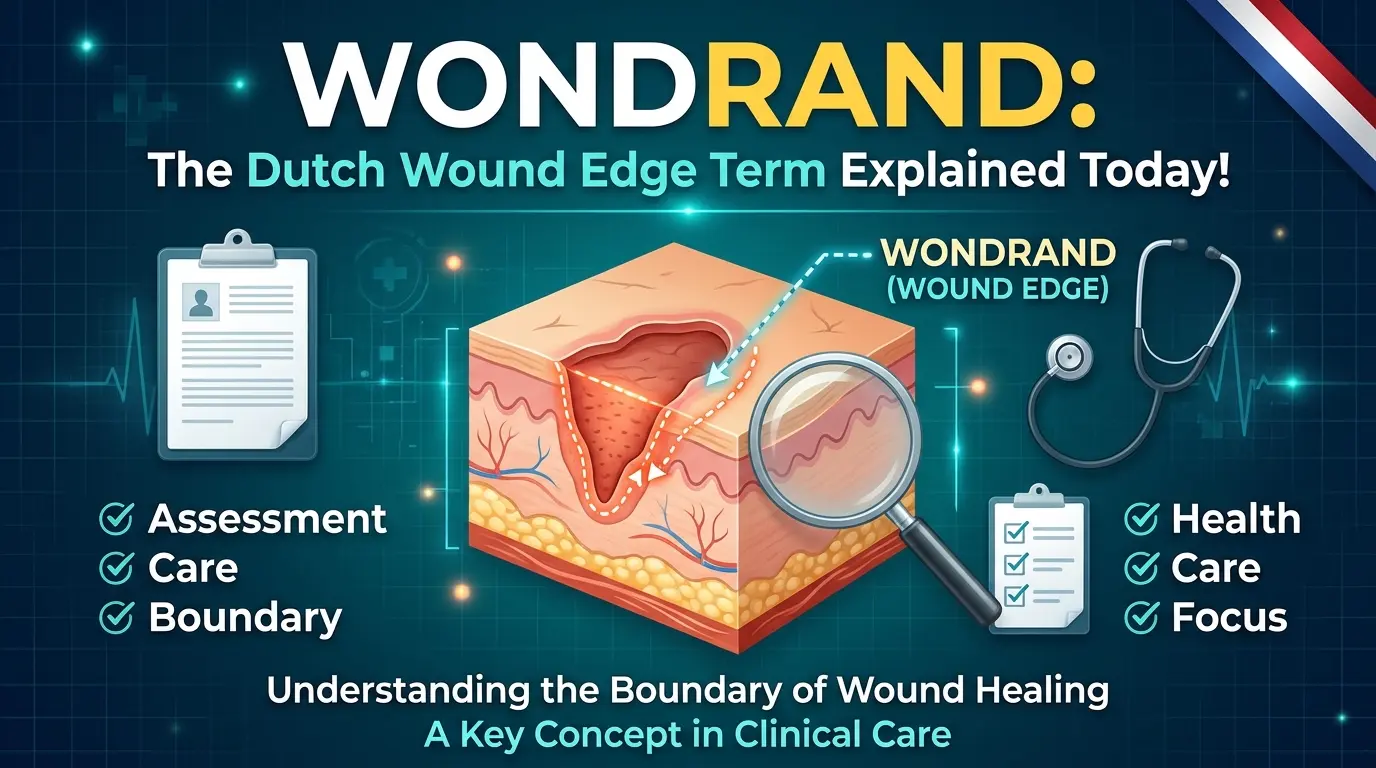
Wondrand is a Dutch medical term that refers to the edge or margin of a wound. It describes the boundary where damaged skin and the surrounding tissue meet. Although the word may look unfamiliar to English-speaking readers, the concept is an important part of wound assessment and modern wound care.
In Dutch healthcare terminology, wond means wound, while rand means edge or border. Together, they form wondrand, meaning wound edge. Healthcare professionals examine this area to understand the condition of the surrounding tissue, identify possible healing problems, and determine whether additional wound care is needed.
The term is particularly relevant when discussing wound healing, skin integrity, moisture management, and clinical wound assessment. Understanding it also helps explain why wound care involves more than simply looking at the visible opening of an injury.
What Is Wondrand?
Wondrand means wound edge or wound margin in English. It refers to the outer boundary of an injury, ulcer, or surgical wound.
A wound has several distinct areas. The wound bed is the exposed tissue inside the injury, while the wound edge forms its boundary. The surrounding skin is another important area because it can show irritation, moisture damage, or other changes associated with the wound.
Dutch healthcare terminology formally recognizes WondRand as a separate wound-assessment concept. The Dutch healthcare information standards describe it as the condition of the outer edges of a wound.
This distinction matters because a wound may appear relatively small while the surrounding edges show signs of delayed healing or tissue damage.
Wondrand Meaning: Understanding the Dutch Word
The word Wondrand is formed from two Dutch words:
Wond: Wound or injury.
Rand: Edge, boundary, or border.
Their combination produces a straightforward medical description: the edge of a wound.
In English medical writing, the closest equivalents are wound edge and wound margin. These expressions describe the same anatomical area, although terminology can vary slightly between clinical documents.
The word is not the name of a medical procedure or a particular wound treatment. It describes a physical part of a wound that healthcare professionals examine during assessment.
Why Wound Edges Matter in Medical Care
The condition of a wound’s edges can provide useful information about the healing process. Healthy healing generally involves the gradual formation of new tissue and the movement of new skin cells across the wound surface.
When the edges are damaged, swollen, excessively moist, or separated from the wound bed, healing may become more complicated.
Healthcare professionals therefore examine several characteristics.
1. Edge Integrity
Edge integrity describes whether the wound margins remain intact and how they connect with the surrounding tissue.
Intact edges can provide useful information about the condition of the wound. Irregular, separated, or damaged margins may require closer examination.
2. Maceration
Maceration occurs when skin remains exposed to excessive moisture for too long. The affected tissue may become soft, pale, and fragile.
In wound care, excessive wound fluid can contribute to maceration around the edges. Appropriate moisture management helps protect the surrounding skin.
3. Epithelialization
Epithelialization is the process through which new epithelial cells develop and spread across a wound surface.
It is an important part of wound closure. Healthcare professionals observe the wound margins for signs of new skin formation as healing progresses.
4. Undermining
Undermining occurs when tissue beneath the wound edge becomes damaged or eroded, creating a space underneath the surrounding skin.
This condition may not be obvious from a simple visual examination. It can require careful clinical assessment to understand the extent of tissue involvement.
Dutch wound-care standards recognize undermining, maceration, skin irritation, and epithelialization as relevant wound-edge findings.
How Wondrand Is Used in Wound Assessment
Wondrand is not a treatment method. It is a descriptive term used when evaluating the condition of a wound.
A healthcare professional may assess the wound edge alongside other characteristics, including:
Wound location and dimensions.
Wound depth.
Tissue condition.
Moisture and drainage.
Signs of infection.
Condition of the surrounding skin.
Progress toward wound closure.
This broader approach helps prevent important details from being overlooked.
For example, a wound may have a healthy-looking central area but show excessive moisture around its edges. Looking at both areas gives a more complete understanding of the wound.
Wondrand and the TIME Framework
One established approach to wound assessment is the TIME framework. It organizes observations into four areas:
| Letter | Meaning | What professionals assess |
|---|---|---|
| T | Tissue | Condition and type of wound tissue |
| I | Infection/Inflammation | Signs of infection or inflammation |
| M | Moisture | Wound fluid and moisture balance |
| E | Edge | Wound margins and epithelial advancement |
The final category is particularly relevant to Wondrand because it focuses on the condition and progress of the wound edges.
The framework helps healthcare professionals consider the wound as a whole rather than concentrating exclusively on its central area.
Wondrand Features: What Healthcare Professionals Examine
Although Wondrand is not a product with commercial features, its clinical meaning relates to several observable characteristics.
The most relevant include:
Shape and definition: Whether the wound boundary is clearly visible.
Attachment: Whether the edges are attached to the wound bed.
Moisture condition: Whether the surrounding tissue is excessively wet or unusually dry.
Tissue thickness: Whether the margins appear thickened, hardened, or rolled.
New skin formation: Whether epithelial tissue is advancing across the wound.
Undermining: Whether tissue damage extends underneath the wound margins.
These observations can help healthcare professionals document changes over time and evaluate whether a wound is progressing toward closure.
Common Wondrand Uses in Healthcare
The term appears in medical documentation, wound assessment, nursing education, and clinical discussions.
Wound Documentation
Healthcare professionals record the condition of wound edges as part of a broader assessment. This creates a consistent description that can be compared during later examinations.
Monitoring Healing Progress
Changes around the wound margins can provide useful information about healing. Advancing epithelial tissue, for example, may indicate progress toward wound closure.
Identifying Complications
Maceration, undermining, and rolled edges can indicate problems that require further clinical assessment. Recognizing these findings helps healthcare professionals identify concerns that may otherwise be overlooked.
Supporting Wound-Care Decisions
Wound-edge observations contribute to decisions about moisture management, dressing selection, and whether specialist assessment is appropriate.
These uses are consistent with published wound-management guidance and established clinical assessment practices.
Is Wondrand a Website, Company, or Medical Product?
This is an important distinction for anyone encountering the term through an online search.
Wondrand is an established Dutch wound-care term. However, the term itself does not establish the existence of a particular company, medical product, or digital platform.
There is insufficient verified information to identify a specific Wondrand website, registered business, product owner, or commercial service associated with the word.
It would therefore be misleading to describe Wondrand as a medical technology platform or claim that it offers particular features without evidence.
Is Wondrand Legit?
As a medical term, Wondrand has a documented place in Dutch healthcare terminology. It is used to describe wound edges in clinical information standards.
However, if someone encounters a website or commercial service using this name, its legitimacy must be assessed separately. The medical meaning of a word does not automatically verify a business operating under that name.
Who Owns Wondrand?
There is no verified ownership information establishing a particular company or individual as the owner of the medical term Wondrand.
The word is part of Dutch medical vocabulary rather than evidence of a privately owned brand.
Wondrand vs. Wound Bed vs. Surrounding Skin
These three terms describe different parts of the wound area. Understanding their differences makes wound documentation easier to interpret.
| Term | Meaning | Main focus |
|---|---|---|
| Wondrand | Wound edge or margin | Boundary of the wound |
| Wound bed | Exposed tissue inside the wound | Tissue condition and healing |
| Periwound skin | Skin surrounding the wound | Skin integrity and irritation |
The distinction is clinically useful because each area can show different problems.
For example, the wound bed may contain healthy granulation tissue while the surrounding skin is affected by excessive moisture. Similarly, the wound edge may show delayed epithelialization even when other areas appear to be improving.
A complete wound assessment considers all three areas together.
Conclusion
Wondrand is a straightforward Dutch term with an important role in wound-care terminology. It describes the edge of a wound, an area that can reveal valuable information about tissue condition, moisture balance, and the progress of healing.
Its significance comes from the clinical details it helps professionals observe and document. Understanding the difference between the wound edge, wound bed, and surrounding skin makes the term easier to interpret in both medical and everyday reading.
For English-speaking readers, the simplest translation remains the most useful: Wondrand means wound edge.
FAQs
What is Wondrand?
Wondrand is a Dutch medical term meaning wound edge or wound margin. It describes the outer boundary of a wound.
What does Wondrand mean in English?
Its closest English translations are wound edge and wound margin. The word combines the Dutch terms wond (wound) and rand (edge).
Is Wondrand a medical condition?
No. Wondrand describes an anatomical part of a wound. It is not the name of a disease, diagnosis, or medical condition.
How does Wondrand work?
Wondrand does not work as a treatment or device. It is a descriptive clinical term used when examining and documenting wound margins.
What are the main Wondrand features?
The relevant characteristics include edge integrity, moisture condition, epithelialization, maceration, thickening, and undermining.
Is Wondrand a website?
The word itself is a Dutch medical term. Its meaning does not establish that an official website or commercial platform exists under that name.
Is Wondrand legit?
Its use as a Dutch healthcare term is supported by established medical terminology. Any website or business using the name requires separate verification.
Who owns Wondrand?
No specific individual or company ownership of the medical term has been established by the sources consulted.